Service

Disability evaluations for neck and lower-back conditions

Pain 2 Wellness conducts clinical disability evaluations focused on the neck (cervical spine) and lower back (lumbar spine). An evaluation documents current clinical findings and functional information — it is not treatment, and it is not a legal determination.
Focused on neck (cervical) and lower back (lumbar) conditions

Documents clinical findings and functional information

Distinct from ongoing treatment

Distinct from legal or insurance decision-making

What a disability evaluation is

A disability evaluation is a structured clinical assessment used to document how a specific condition — most commonly a neck or lower-back condition — may be affecting a patient's day-to-day function. The evaluation gathers history, exam findings and functional information into a clear clinical picture.

Why an evaluation may be considered

Following an injury such as a motor vehicle collision, or with a persistent neck or lower-back condition, a patient or a treating clinician may want a clear record of current clinical status and functional limitations. That record can support ongoing care planning and communication with other parties involved in the patient's care.

How neck and lower-back conditions may affect function

Cervical and lumbar conditions can influence everyday activities in different ways for different patients — from sustained postures and lifting to sleep, driving or work tasks. The evaluation aims to describe what is observed and reported, not to predict outcomes.

What may be considered during the evaluation

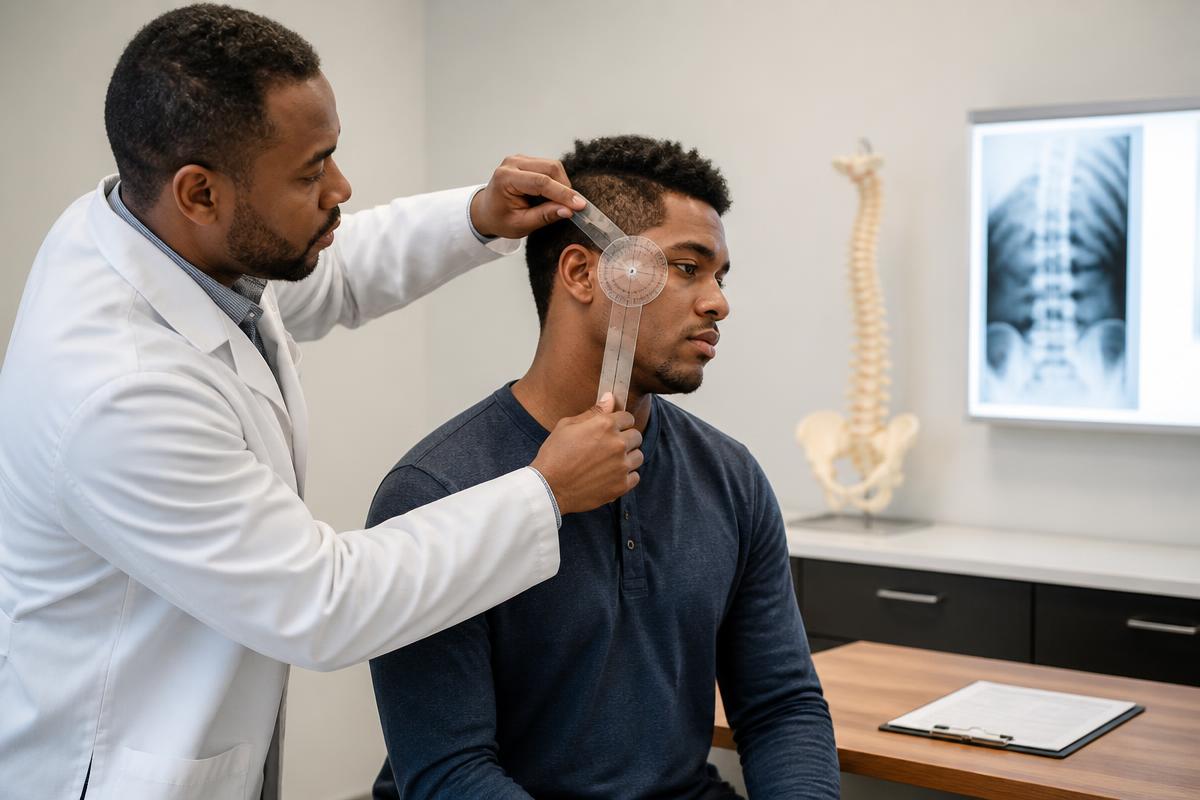
History of the injury or condition, examination findings (range of motion, orthopedic and neurological testing where appropriate), prior imaging or clinical records when available, and patient-reported functional information. Findings are documented as observed — no assumptions are made about legal or benefit outcomes.

Disability, impairment and functional limitation are not the same

These terms are related but not interchangeable. An impairment describes a change in body structure or function. A functional limitation describes difficulty performing a specific activity. 'Disability' can mean different things in different clinical, legal or benefit contexts. The evaluation documents what is clinically observed and reported — it does not equate every finding to a specific legal or benefit category.

Evaluation is different from treatment

A disability evaluation is a documentation service. Treatment recommendations — chiropractic care, rehabilitation, referrals — are addressed separately based on the patient's individual clinical picture.

What an evaluation does not do

It does not provide legal advice, settlement guidance, claim valuation, or a prediction of litigation outcome. It does not guarantee insurance acceptance or benefit eligibility. It does not by itself establish legal liability or entitlement to compensation.

Where this service is offered

Pain 2 Wellness provides disability evaluations at both of its Georgia offices — the Cascade Road office in Atlanta and the Fayetteville office. Which office you visit is a matter of convenience; the service itself is the same at either location.

Scheduling

To ask whether a disability evaluation is appropriate in your situation, contact Pain 2 Wellness using the scheduling options below. This service is available at both offices: Cascade Road in Atlanta at (404) 699-0966 and Fayetteville at (770) 406-9355. You can also schedule online and choose the office that works best for you.

Frequently Asked Questions

What is a disability evaluation?

A disability evaluation is a clinical assessment used to document how an injury or condition may be affecting a patient's function. It is not treatment, and it is not a legal determination.

How is a disability evaluation different from a functional capacity evaluation (FCE)?

A disability evaluation focuses on documenting how a specific condition — commonly the neck or lower back — may be affecting function. An FCE is a structured assessment of a broader set of physical and functional abilities. See our Functional Capacity Evaluations page for more.

Does an evaluation guarantee a legal or insurance outcome?

No. An evaluation documents clinical findings and functional information. Decisions about insurance, benefits or legal matters are made by other parties using their own standards.

What information may be considered?

History of the injury or condition, examination findings, prior imaging or records where available, and functional information described by the patient or observed during the exam.

Related pages

Ready to feel better?

Book a private consultation at our Cascade Road (Atlanta) office or Fayetteville location.